
















A Smarter Classroom Supply Station: How Teachers Can Spend Less Time Searching and More Time Teaching
Share
Introduction — Every Classroom Has Its Own Rhythm
A classroom is a busy place.
Students are arriving. Assignments are being collected. Someone needs a pencil. Another student needs paper. A marker runs dry halfway through an explanation.
Meanwhile, the lesson needs to keep moving.
Teachers manage countless small details throughout the day, and even a well-planned lesson can be interrupted by missing supplies.
A thoughtful classroom supply station won't eliminate every interruption, but it can make everyday materials easier to access, use, and return.
1. Identify the Supplies Students Need Most
Start by observing which materials are requested repeatedly.
Common examples include pencils, erasers, notebook paper, rulers, glue, and colored pencils.
Keep these items together in a clearly identified location.
Avoid placing every classroom supply in the same container. Everyday essentials should be easier to reach than occasional project materials.
2. Create Clearly Labeled Categories
A supply station works best when students understand it without needing constant instructions.
Consider simple labels such as:
WRITING — pencils, pens, erasers.
PAPER — notebook paper, index cards, worksheets.
PROJECTS — scissors, glue, markers, colored pencils.
TEACHER SUPPLIES — materials reserved for classroom instruction.
Clear labels can help students find and return materials more independently.
For younger students, consider pairing words with simple pictures.
3. Separate Shared Supplies From Personal Materials
Not everything needs to be communal.
Students may keep their own notebooks and folders while accessing shared supplies when needed.
Use different containers or storage areas for shared classroom materials and teacher-only supplies.
This helps maintain predictable boundaries.
4. Make Paperwork Easier to Manage
Worksheets, homework, permission forms, and completed assignments can quickly become mixed together.
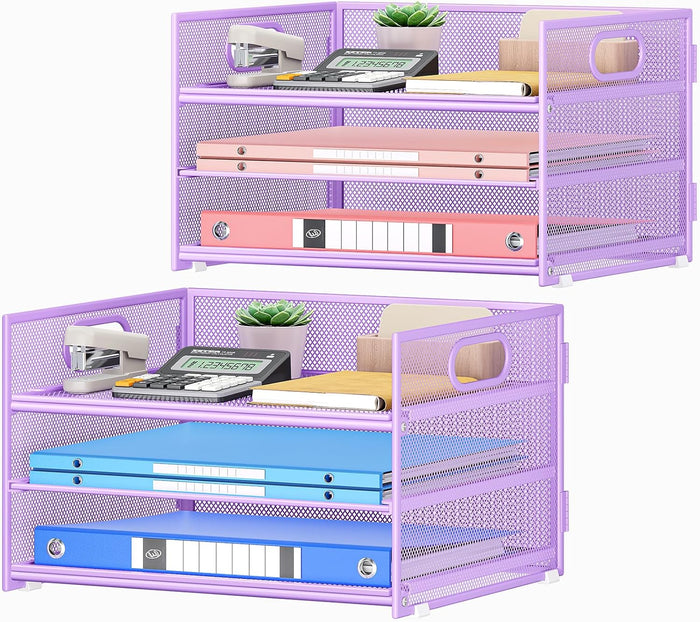
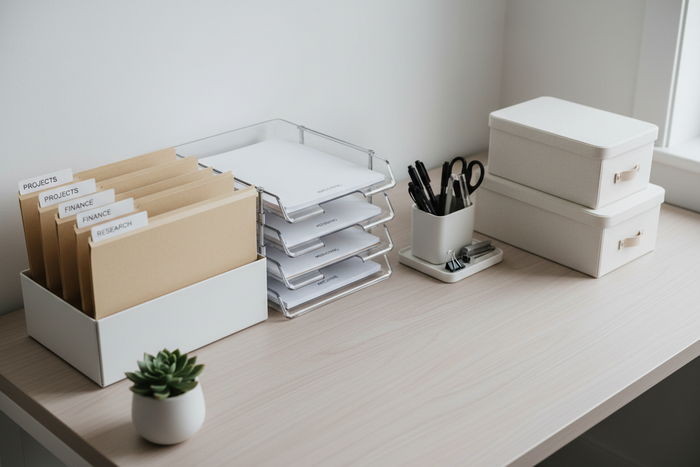
Create labeled document trays or folders for:
TO DISTRIBUTE
TO COLLECT
TO REVIEW
TO RETURN
This gives paper a clear path through the classroom.
5. Create a Weekly Restocking Routine
A supply station is only helpful when supplies remain available.
Choose a consistent time each week to check frequently used materials.
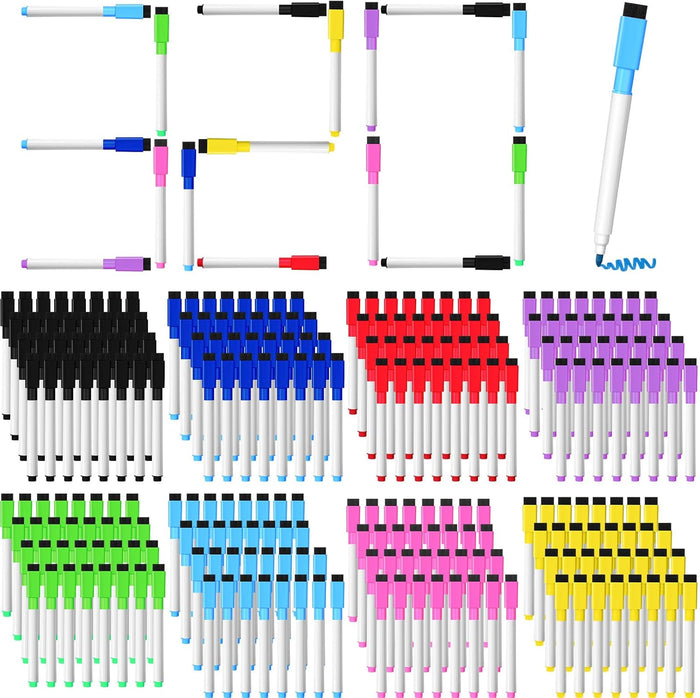
Test markers, sharpen pencils as appropriate, replace empty glue sticks, and replenish paper.
Students can help with suitable organizational tasks under classroom supervision.
6. Prepare for Creative Projects Separately
Art and classroom projects often require materials that aren't needed every day.
Keep markers, craft paper, colored pencils, poster supplies, and adhesives in a separate project area.
Before a project begins, gather the required supplies into a portable container.
This prevents the everyday supply station from becoming overcrowded.
Before → After
Before: Frequent supply searches, mixed paperwork, disorganized project materials, and repeated interruptions.
After: Clear supply categories, predictable storage, easier worksheet handling, and a more manageable classroom routine.
Shop the Solution
|
Product Collection |
Recommended Product Types |
|---|---|
|
Classroom Writing |
Pencils, Erasers, Markers, Highlighters, Pens |
|
Paper & Notebooks |
Notebook Paper, Construction Paper, Index Cards, Notebooks |
|
Classroom Organization |
Storage Caddies, Labels, Document Trays, Folders |
|
Teaching & Presentation |
Whiteboard Markers, Presentation Supplies, Display Materials |
|
Creative Classroom |
Colored Pencils, Craft Paper, Glue, Scissors, Art Supplies |
Featured Collection: Classroom & Teacher Essentials
The Deskcraft Co. Philosophy
At Deskcraft Co., we believe teachers deserve practical tools that support the important work happening in their classrooms.
Good classroom organization isn't about creating a picture-perfect room. It's about making everyday learning materials easier to manage.
Conclusion
A classroom supply station doesn't need to be expensive or complicated.
Start with the materials students use most.
Create clear categories.
Make returning supplies easy.
Build a simple restocking routine.
When everyday tools have a place, there's more room for learning to happen.
Explore Classroom & Teacher Essentials at Deskcraft Co. and prepare your classroom for the days ahead.